 by
by Humans have looked for solutions to global problems such as poverty, hunger, sustainability, etc. for… I’m not actually sure how long, but it’s probably been a while. And it seems as though the heart of creativity is in finding solutions that haven’t been attempted before. We think that new and innovative is far superior to tried and true.
But if we open our eyes and look around, we’ll realize the answers we’re desperately seeking are far more obvious than we think. The answers related to these global questions lie in the natural processes of our planet.
Inherently, nature’s processes are cyclical and self sustaining. Any aspect that is not conductive to the biology of our planet dies out through evolutionary processes.
And typically, when I think about evolution, my mind instantly goes to plants and animals. However there’s something much larger at play here. If we take another step back to look at the big picture, we’ll see that our planet is merely a culmination of natural processes and systems.
Our separate human systems have a direct impact on and connection to Earth’s natural systems. Every action has an equal and opposite reaction, so whatever harm we do to the planet through our systems will, in turn, result in some sort of balancing response from our environment. The further we sway from these natural processes, the greater the response will be from our planet.
Rather than copying the already efficient and sustainable systems of nature, we’ve created our own human systems, attempting to morph the world around us into our own image rather than adapting or fitting into the natural world. Unfortunately, however much humans like to think of themselves as beings created in God’s image, none of the systems we could come up with would surpass the ones that have existed in natural and survived since the beginning of time.
Really, nature as it exists is the closest thing to perfect that we have. It’s merely the human ego that believes it can do better. We are not above the natural laws that exist, and to continue to believe so is surely only inching us closer towards our own extinction.
No matter what political or economic systems we construct, they will never overpower the reality of nature. This being said, our laws should reflect the laws of nature rather than attempting to sidestep it.
These ideas were inspired by a class in Biomimicry I enrolled in online. Essentially, biomimcry is about copying the natural processes and functions that exist in nature already and using them in human design. The human design can be as small and specific as a manufactured product to as large as the systems that structure society itself.

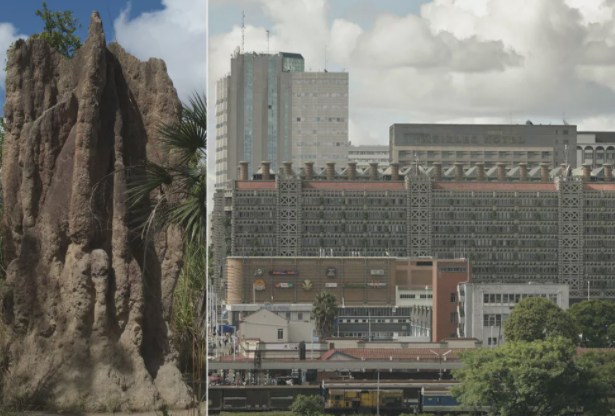
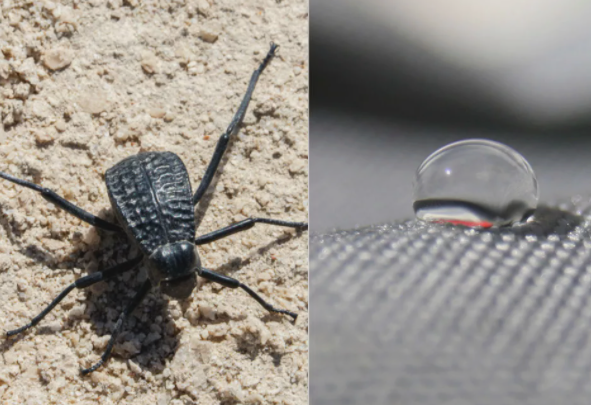
(source for all photos)
Now I’m not claiming to know what these societal systems would look like or how exactly they’d perform, but I do think that nature is the correct place to start when looking for innovative ideas. There is so much out there, in the natural world, that is easy to overlook just because it is so accessible and obvious. But really, if you think about it, everything humans have is, in a way, inspired and created from the natural world.
If we are more intentional about using nature as our muse, then perhaps we’ll find answers to these probing issues much faster than otherwise.
There are certain key differences between human built systems and natural systems of our planet. And what we have created is inherently unsustainable and needs to be restructured if we hope to ensure the survival of humanity.
- Natural systems are flexible and changing, while human systems are rigid and unchanging.
Life is in a constant state of flux. Plants are growing, animals evolving. Life is born, and then it dies. It’s impossible to put a pause on this process.
This being said, humans do not adapt to this change well with the structures we’ve built. Physical buildings are stationary, roads are set in place. When anything at all needs to change, much of the time, we need to scrap what’s already there and start over. Unfortunately, we’ve come to a point where it’s nearly impossible to do so. We leave the antiquated structures in place until they break entirely and we’re forced to come up with quick fixes on the fly.
Infrastructure needs to be built with flexibility in mind. The changing climate, population and degradation processes must be kept in mind when constructing new physical structures. - Nature optimizes, while (wo)mankind maximizes.
The whole goal of capitalism is to create as much as possible. More things. More money. More waste. we want everything to be bigger and better. So we take from nature to aid in this goal.
Overtime, though, we’re bound to run out. Our natural resources aren’t unlimited, and it’s impossible to create at the rate at which we’ve been creating. Rather than using nature to make more things, we should use nature to create systems that produce as little waste as possible. - Nature is cyclical, while human systems are linear.
Everything that happens in a natural process goes back into the system. And this is because everything in life is interconnected. The system reinforces itself without producing waste.
Alternatively, human systems constantly create waste. Single use products end up in the landfills. Gasoline pollutes the air around us. Food is (for the most part) thrown out instead of composted. And only a fraction of recycled products are actually reused.
There are certain circular systems that are a little bit less mainstream, including the ideas of circular economies and permaculture. If we were to transition to these circular systems on a large scale, we’d immediately see widespread impacts on the world around us.
 tori's thoughts
Leave a comment